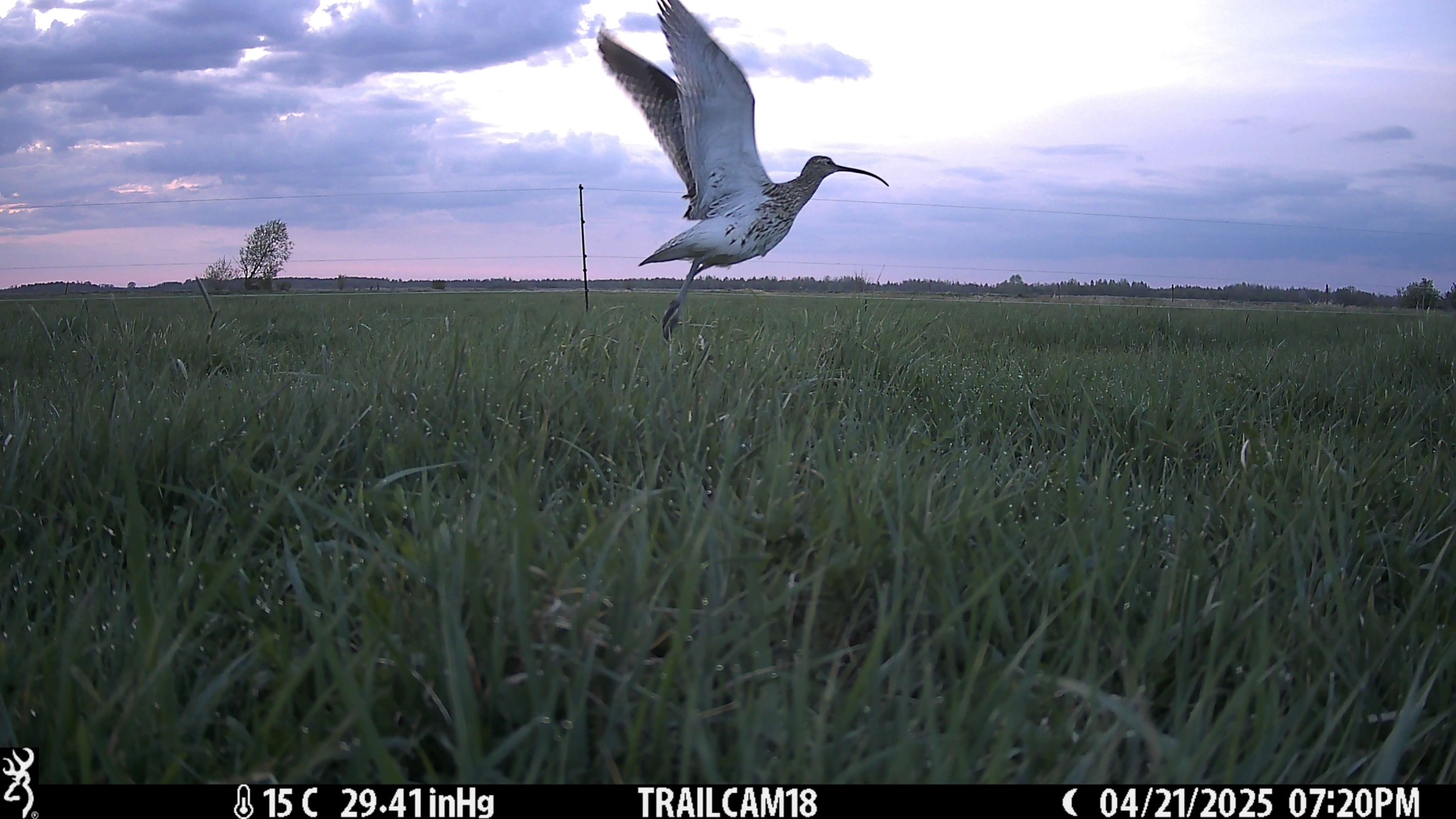
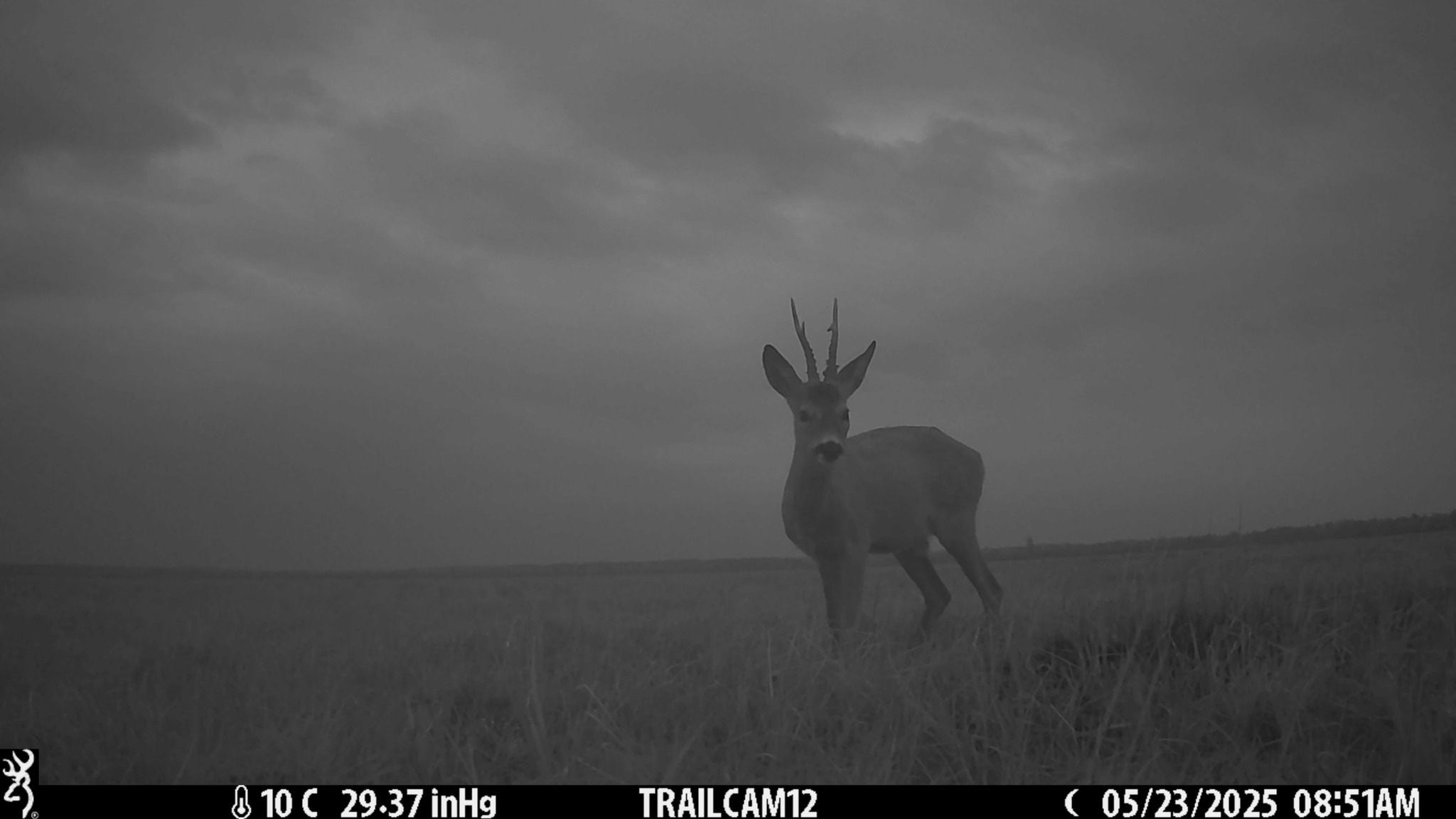
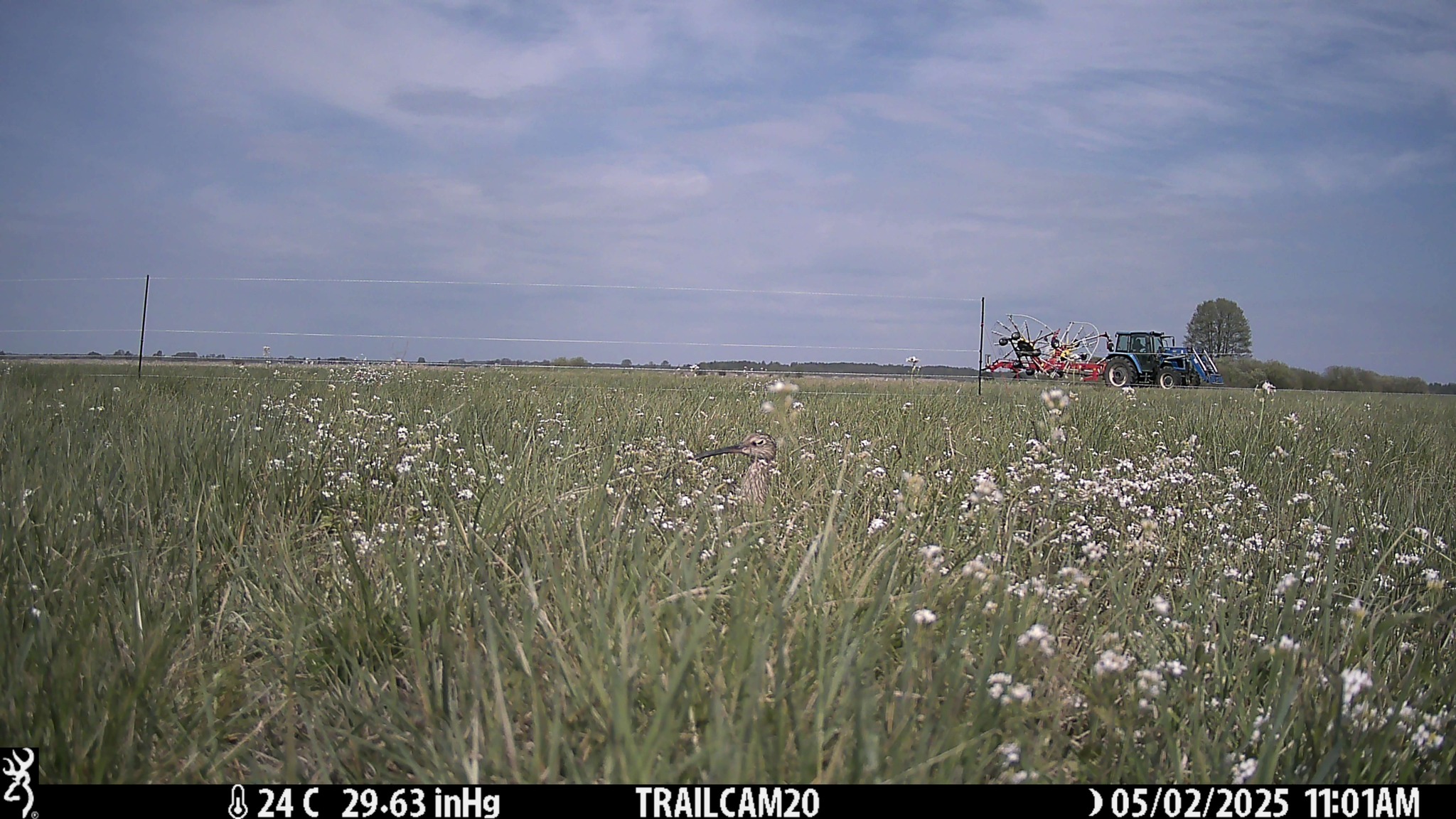
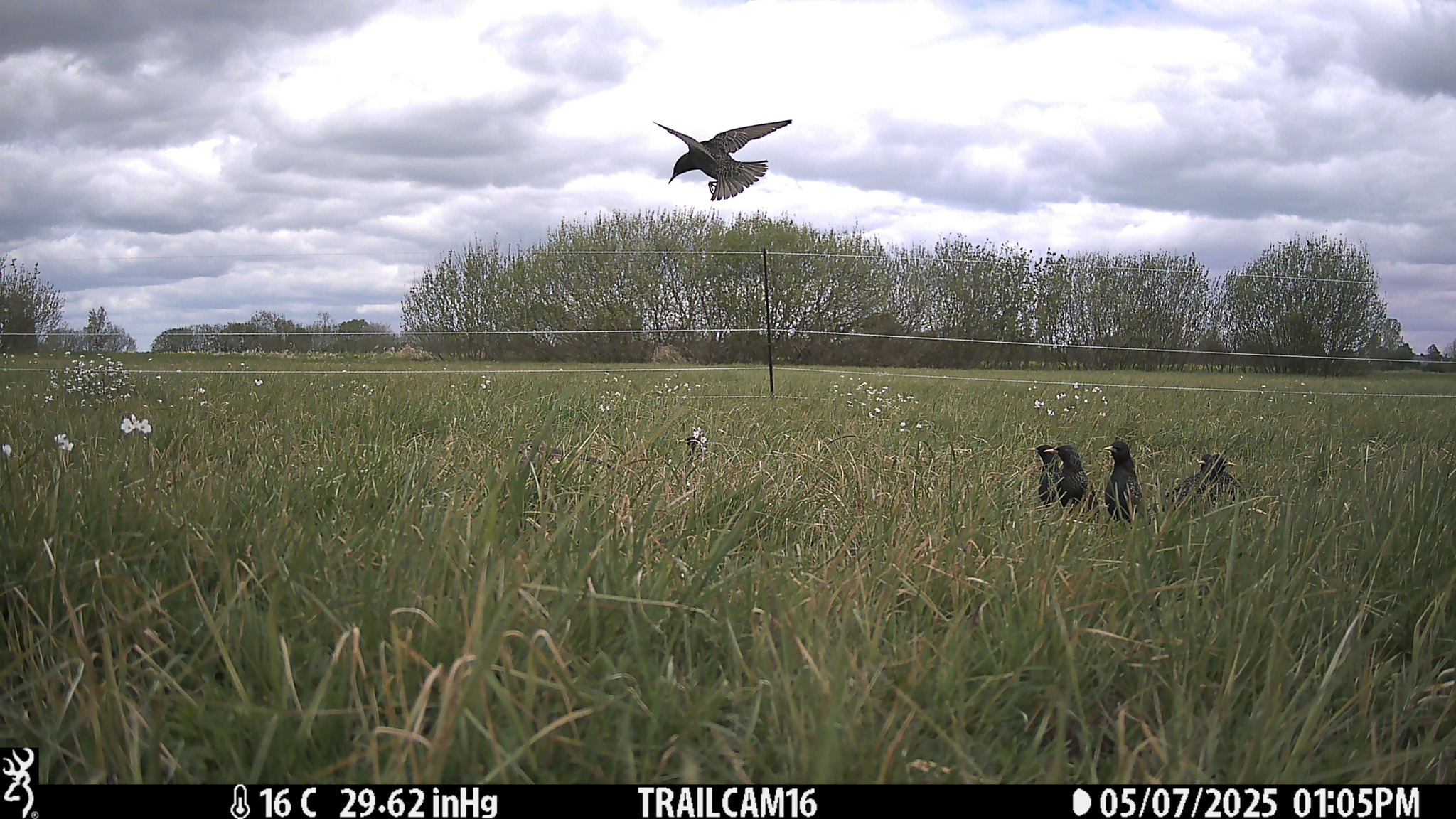
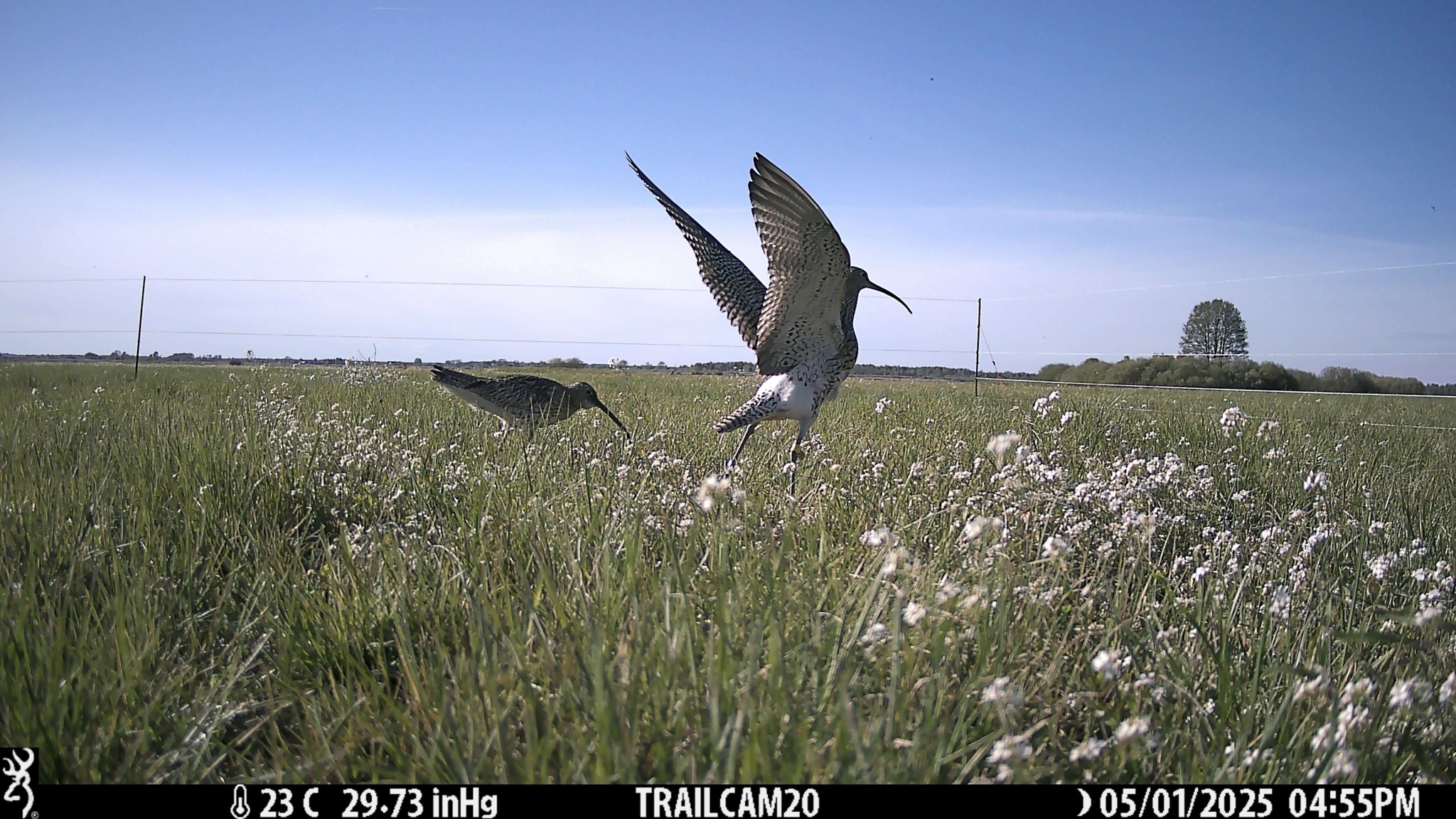
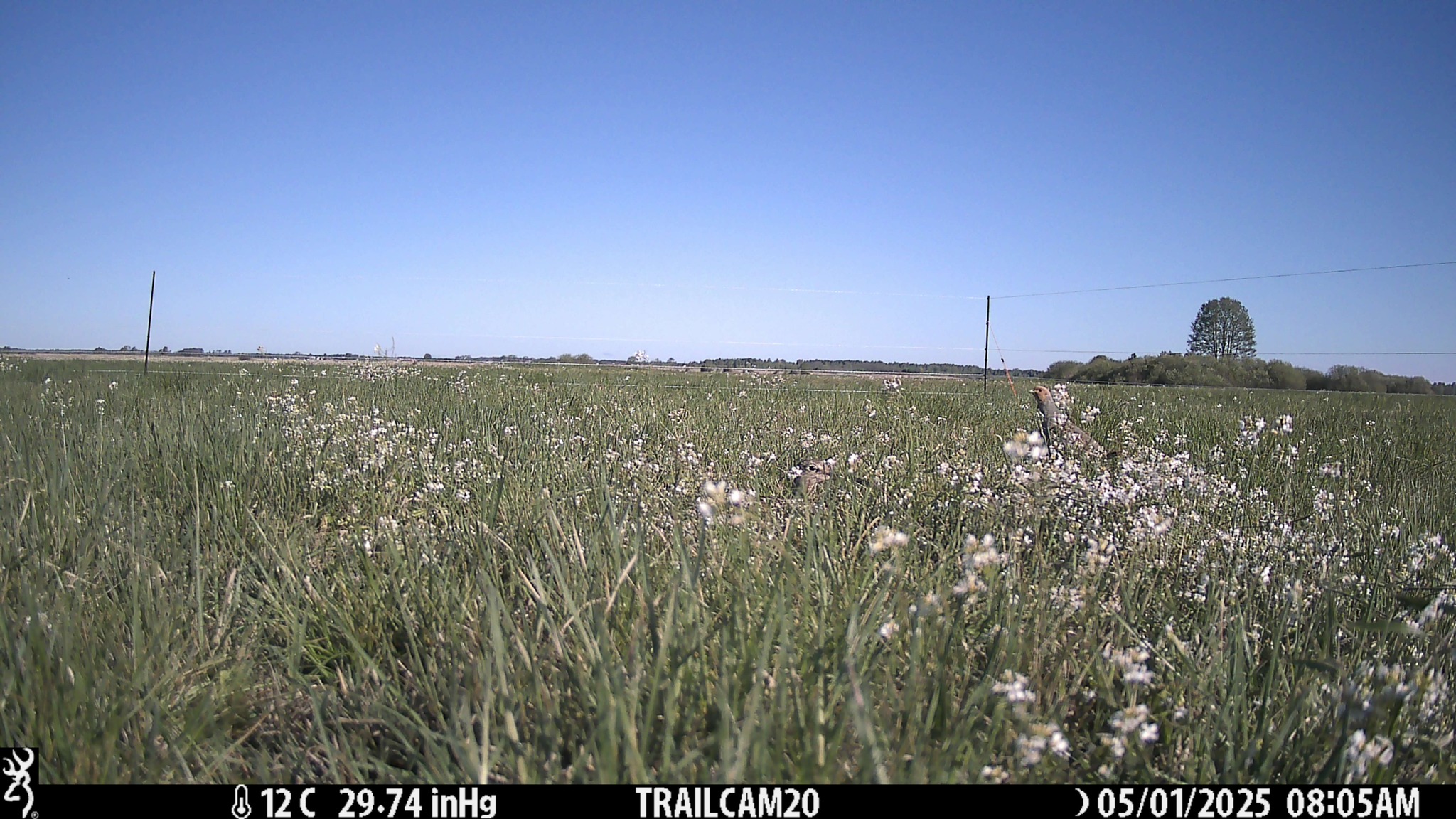
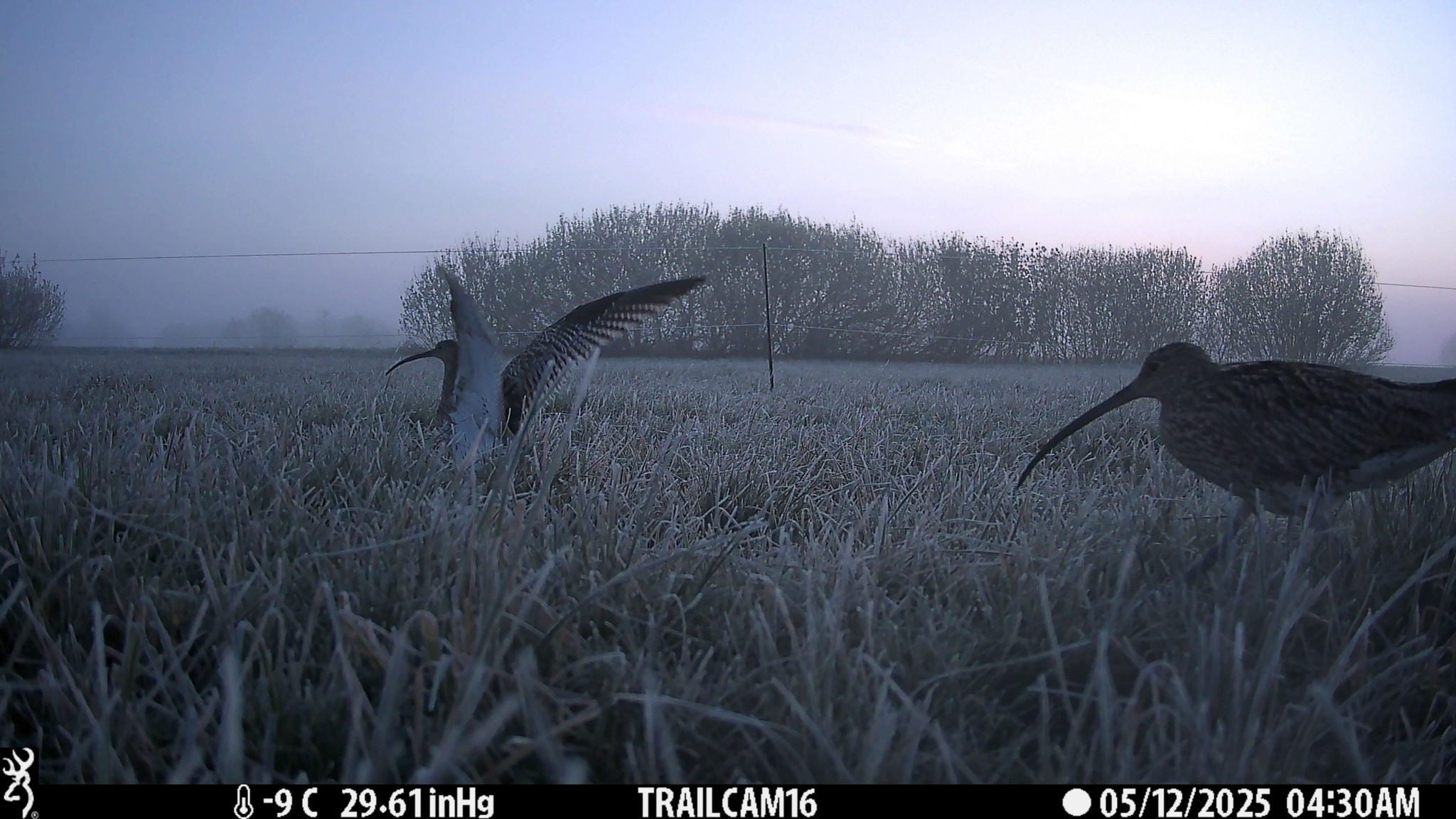
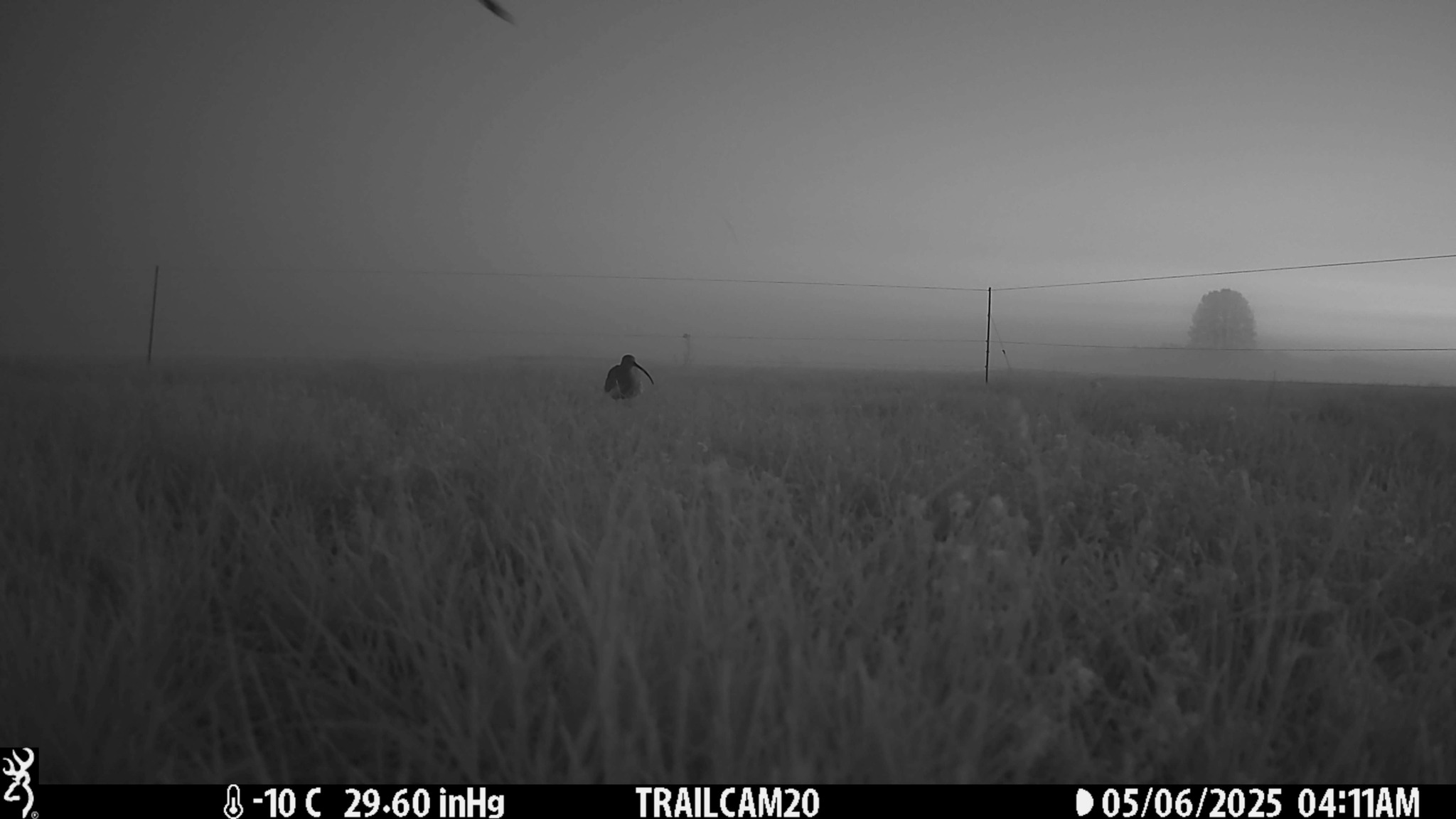
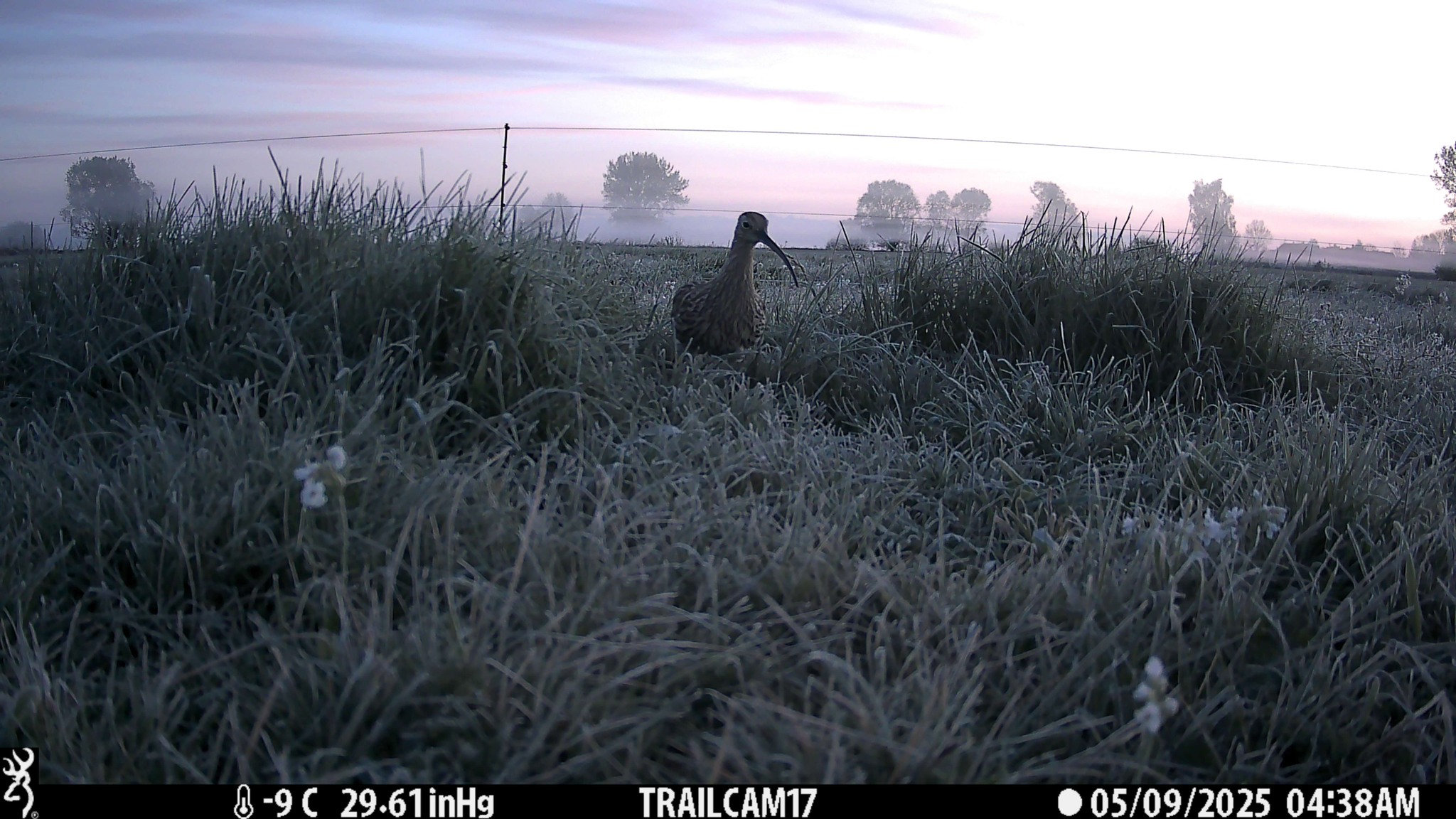
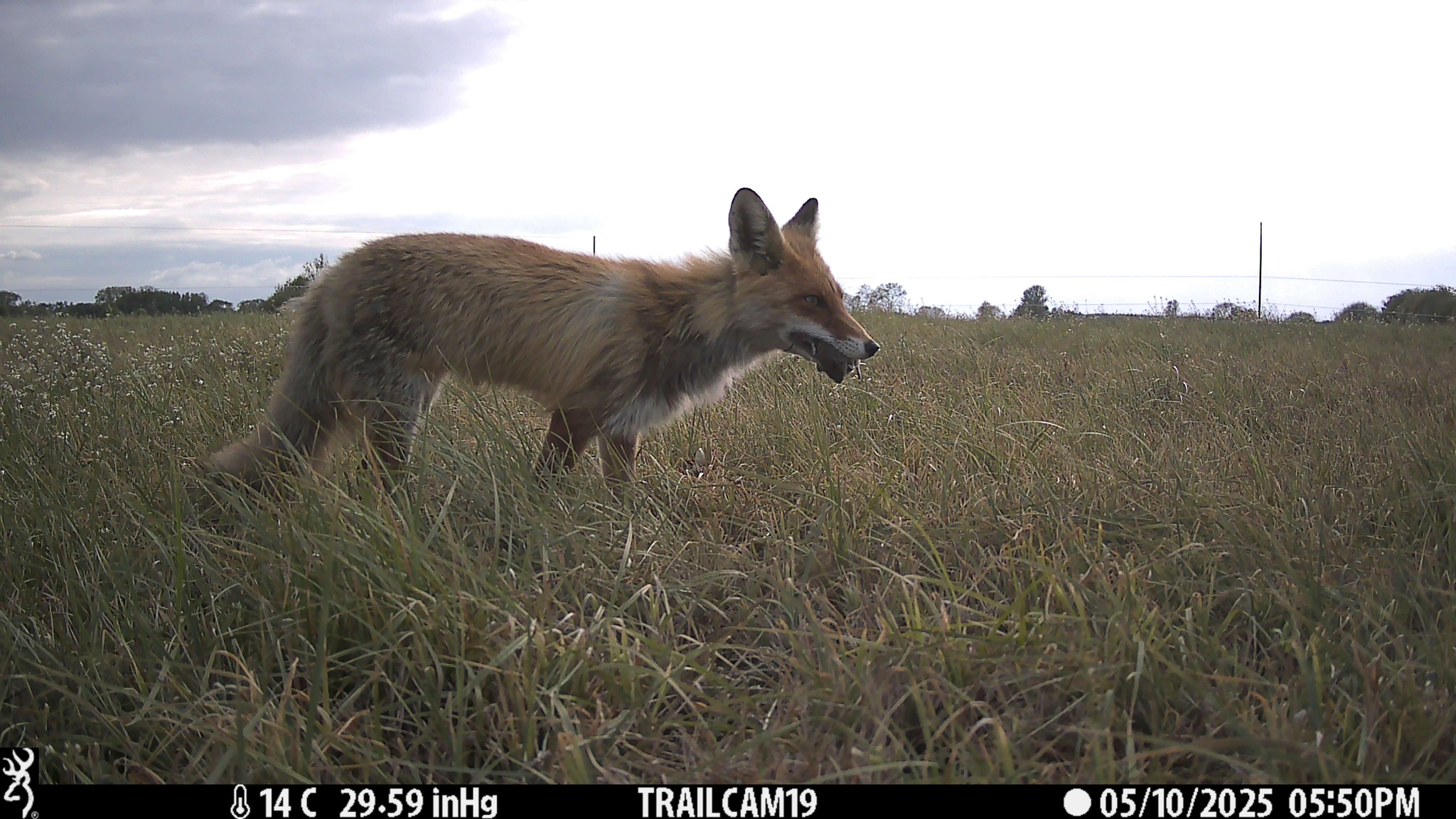
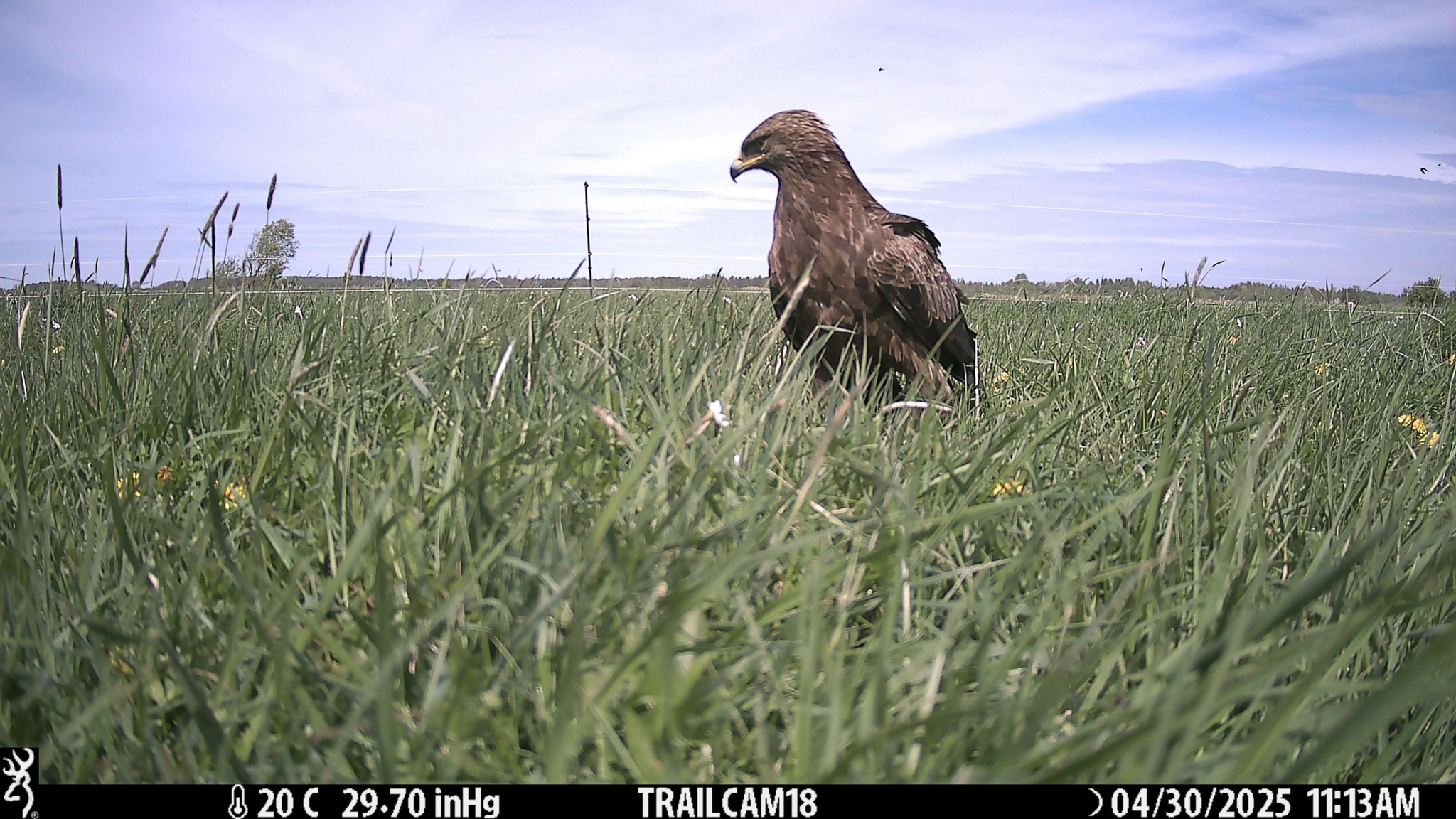
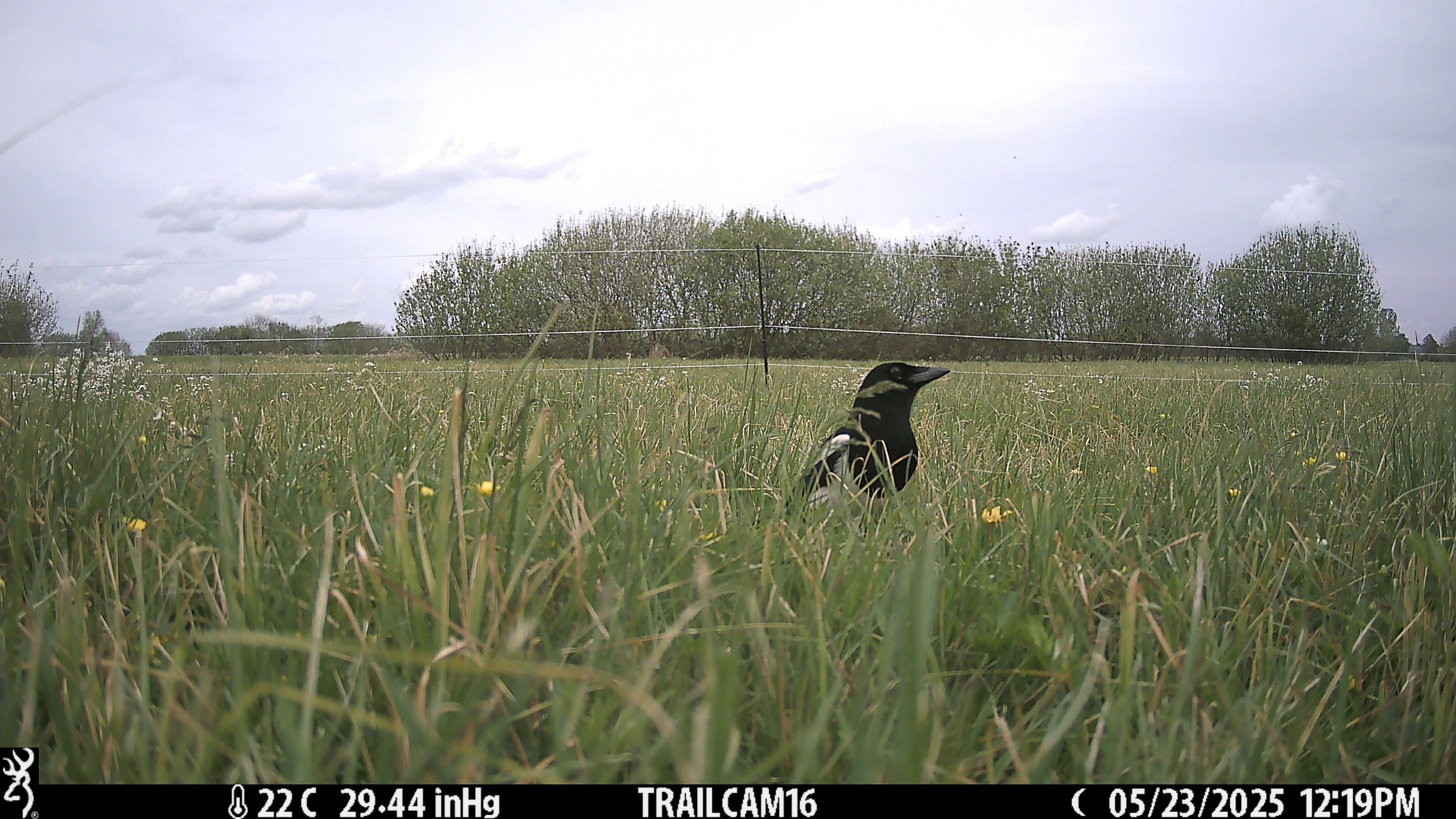
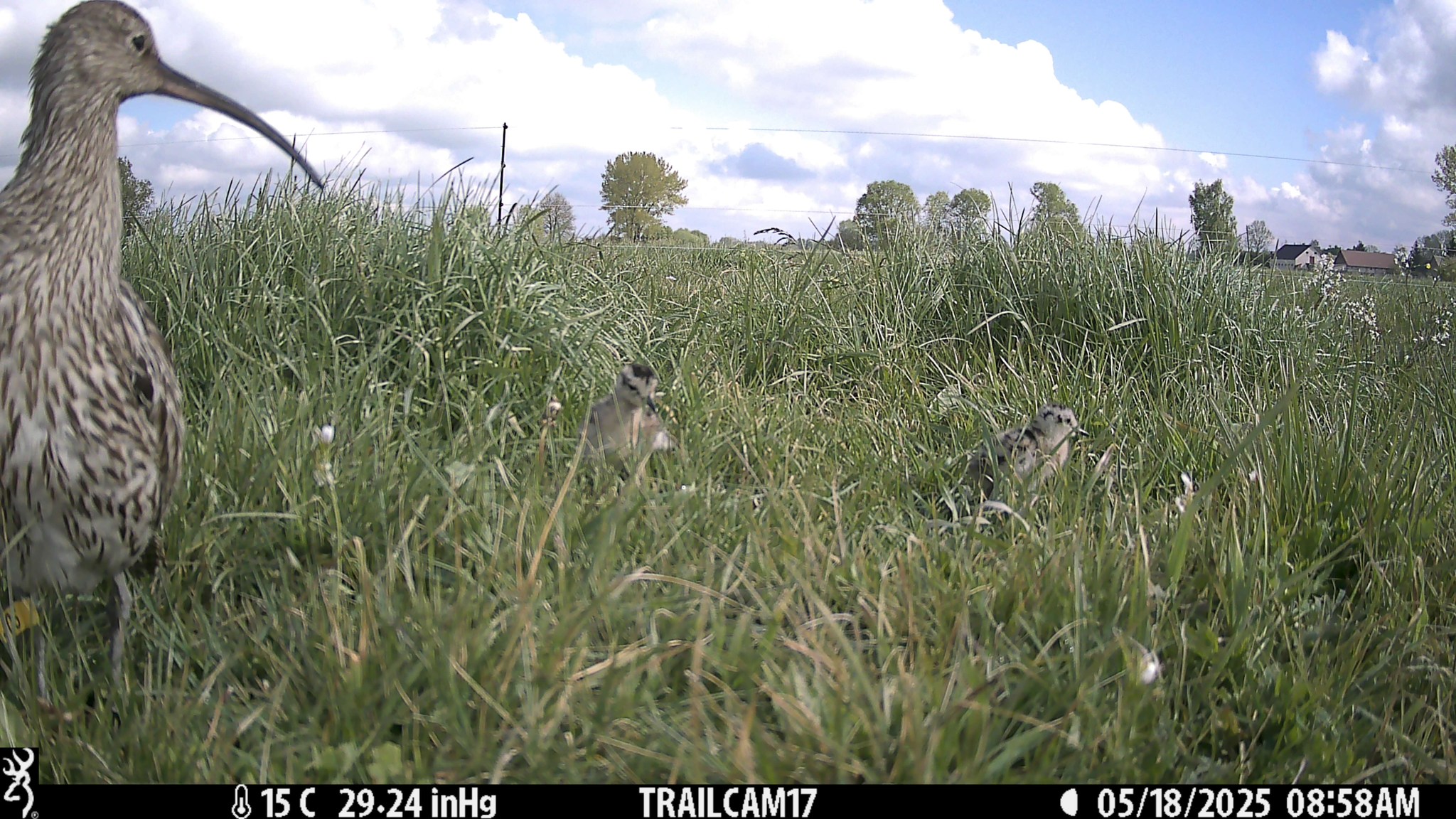
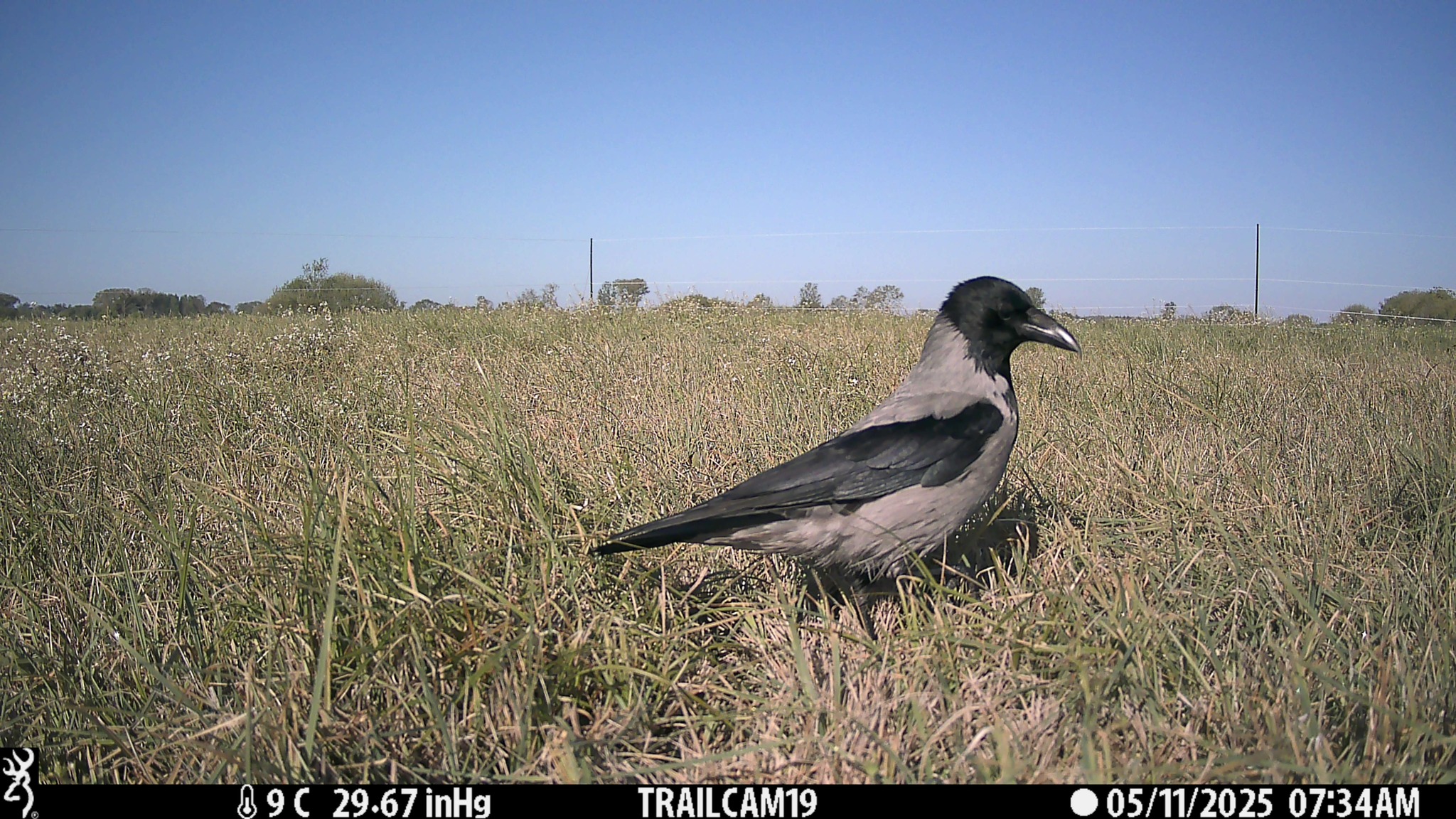
Today, we would like to share with you photos taken by camera traps set up near the nests of Eurasian Curlews in northern Podlasie region. Contrary to appearances, the habitats of the Curlew are not only semi-wild, remote areas. These also include intensively used meadows, often located a short distance from farm buildings. Curlews are often disturbed by agricultural equipment passing nearby, and sometimes dogs or farm cats running loose in the meadows, although fortunately they were not photographed here. Chicken coops located in villages also attract foxes, which are the main threat to eggs and young birds. Birds of prey and corvids pose a mortal danger. Camera traps recorded a Lesser Spotted Eagle plundering a nest and a Hooded Crow. Sometimes, however, there are other interesting but completely harmless visitors, such as Partridges, deer, or curious, ubiquitous Starlings.
This year, the weather was not kind to the Curlews either. The drought and cold weather caused the grass to grow late, making the nests easy for predators to spot. Unfortunately, the Lesser Spotted Eagle took advantage of this situation. The Curlews also had to face bitterly cold nights, when temperatures dropped to below -10 ºC. Even in the second half of May, when the young were hatching, morning temperatures sometimes hovered around zero.
It's not easy being a Curlew. Camera traps help us identify threats and select protection methods tailored to local conditions. Our project and activities carried out in previous years help Curlews avoid some of the dangers. This is evidenced by birds with flags and transmitters that were born in protected nests or in breeding programs and regularly return to breed. But more on thatnexttime.